


Product Link:
https://www.capsulehousemanufacturer.com/products-capsule-house.html
1.Criticism and awakening: When "steel and concrete forest" becomes the sorrow of modern civilization
The ecological cost of solidified space
Traditional buildings rely on high-carbon emission materials such as concrete and steel. The average annual carbon emission of a single high-rise building is as high as 5,000 tons. In addition, the hardening of the land leads to a decrease in surface permeability, exacerbating the urban heat island effect. Taking Shanghai as an example, the green coverage rate of the central urban area will be less than 12% in 2024, far below the 30% standard of the United Nations for livable cities.
A resource black hole with a single function
Fixed buildings are difficult to adapt to population mobility and industrial changes. Data shows that the vacancy rate of commercial complexes in China exceeds 20%, and the vacancy rate of office buildings reaches 34%. A large number of "cement boxes" have become inefficient assets.
2. Ways to break the deadlock: The four subversive characteristics of the new energy space capsule are dynamically growing: the city is now "mobile".
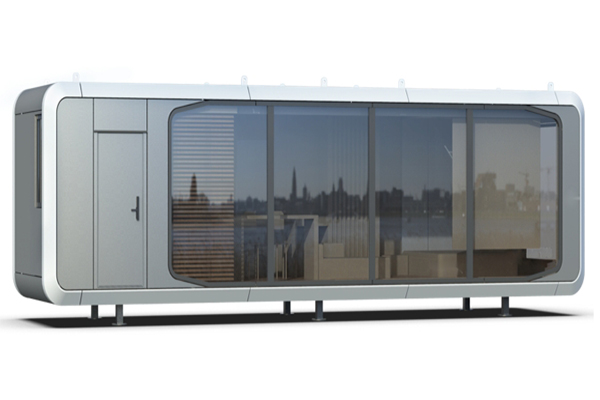
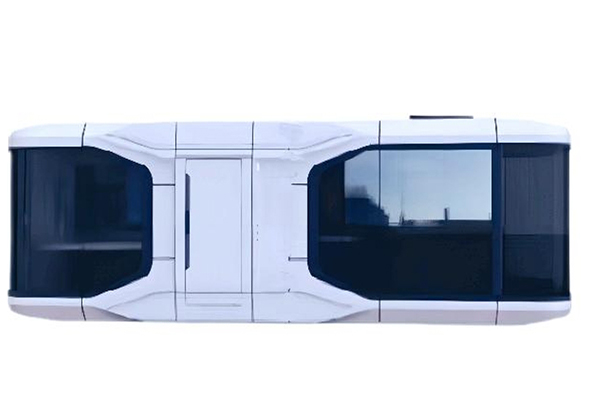
Aerospace-grade lightweight design: Our new energy space capsule house uses recycled aluminum alloy and carbon fiber composite materials. The single unit weighs only 5-15 tons, supports helicopter hoisting and truck transportation, and realizes the flexible migration of "cliff homestay today and desert camp tomorrow".
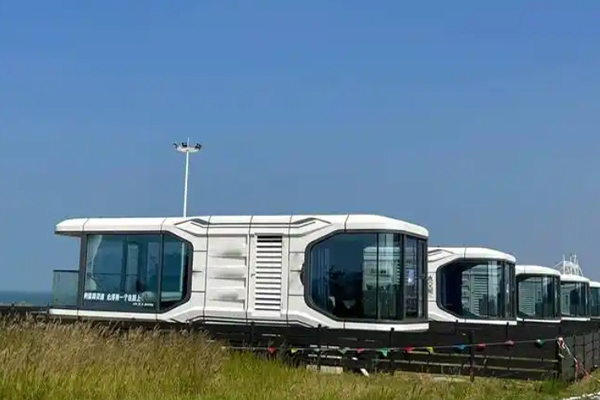
Modular splicing ecology: Through the expansion interface of the cabin, it can be combined into living units, commercial exhibition halls, medical workstations and other forms. For example, a startup park in Qianhai, Shenzhen, assembled 20 space capsules into a "mobile office community", and the rental income increased by 300%.
Autonomous breathing: dual circulation of energy and ecology.
Photovoltaic skin power generation system: equipped with the third-generation cadmium telluride power generation glass, the conversion efficiency in weak light environment reaches 85%, and the daily power generation is 50-80kW·h, which meets the lighting, temperature control and equipment power supply needs of the cabin, and the remaining power is sold in reverse to create income.
Bionic environmental regulation technology: integrated air regeneration module (purifying 99.7% of PM2.5 per hour) and rainwater collection system (saving 30 tons of water per year) make the building a "living ecological cell"
Zero land occupation: a new paradigm of reconciliation with nature.
Adopting a foundation-free hoisting mode to avoid surface damage. Yunnan Shangri-La Cliff B&B project suspends 50 space capsules above the primeval forest, retaining 98% of the vegetation coverage, becoming a "model of ecological restoration" certified by the United Nations Human Settlements Program. Intelligent evolution: AI-driven space life neuron perception network: 200+ sensors monitor structural stress, energy consumption, air quality in real time, and automatically optimize operation and maintenance strategies. Metaverse interactive interface: "one-click switching of space functions" is achieved through VR/AR technology, such as turning a conference room into a panoramic starry sky cinema in seconds.
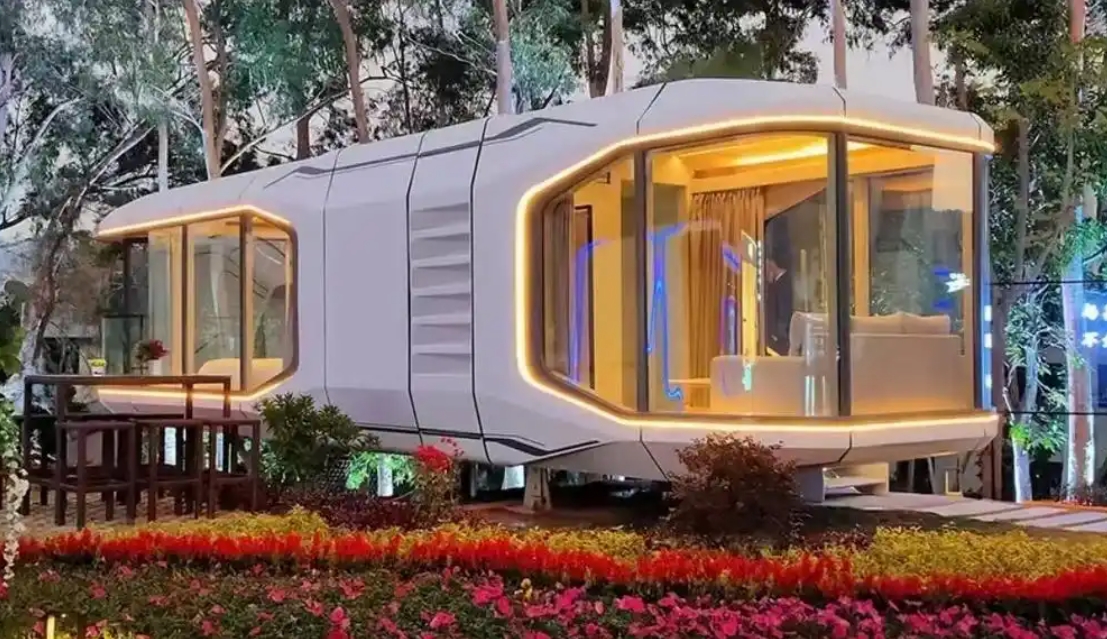
3. Future vision: How space capsules reshape urban civilization From "building cities" to "cultivating cities" Beijing Tongzhou Sub-Center pilots the "Space Capsule Modular New City", which realizes the flexible adjustment of population size and industrial functions through the dynamic combination of 5,000 capsules, saving 60% of land and reducing carbon emissions by 75% compared with traditional development models. From "resource consumer" to "ecological contributor" Each space capsule generates 18,000 kWh of electricity per year, which is equivalent to planting 500 trees. The "Zero Carbon Community" project on Chongming Island in Shanghai has a cluster of 300 cabins, with an annual net power generation of 5.4 million kWh, becoming the first "Negative Carbon Human Settlement Demonstration Zone" in the Yangtze River Delta. Crisis Response: Revolutionary Improvement of Urban Resilience In the 2024 Gansu earthquake, a space capsule equipped with medical modules built a temporary hospital within 72 hours, and the autonomous power supply system guaranteed the treatment of 3,000 people, highlighting the emergency value of the "mobile city".
4. Technical Endorsement: Dimensionality Reduction Empowerment of Aerospace Technology Space-level Safety Protection: 6 layers of vacuum insulation cabin wall + inert gas filling, thermal conductivity coefficient is only 0.02W/m²·K, which can withstand extreme climates of -60℃ to 80℃.