

Product Link:
https://www.capsulehousemanufacturer.com/products-creative-container-house.html
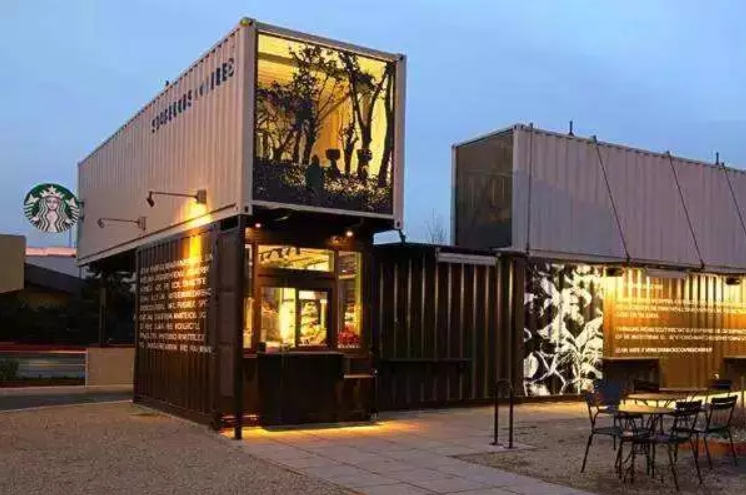
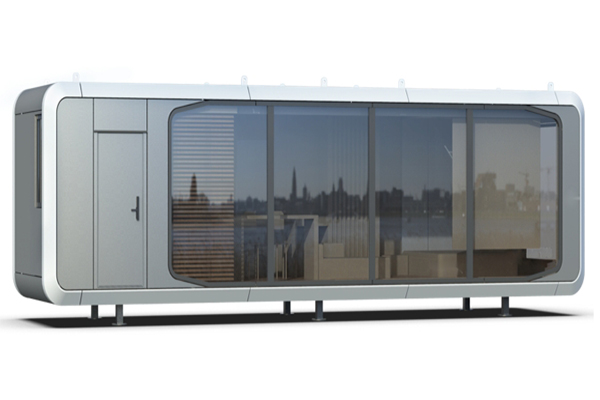
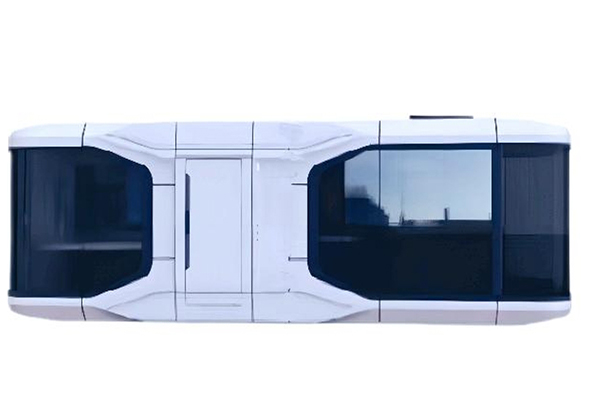
Container houses are a kind of architectural system that hits the fashion trend again and again. They can be moved to any place at any time, bringing people a more convenient and comfortable life. Solar photovoltaic panels can be used for indoor electricity, solar water heaters can be used for heating and water supply, and the discharge of indoor showers and domestic water is purified by the sewage treatment system for reuse. Depending on the number of people, container houses of different sizes can be made. Next, let's take a look at the classification of containers!
1. Dry-box type housing container
Dry-box type housing container reflects some main features of dry cargo container. Its steel structure is a dry box structure stretched on the basis of ISO standard container, and the main structure is completed by adding internal and external insulation layers, decorative panels, etc.; a keel is set between the internal and external insulation layers to increase the strength of the inner wall; the floor adopts foamed cement board or fiber cement board, and the surface laying materials can be plastic floor, wooden floor, bamboo wood floor or pasted floor tiles; the inner wall generally adopts gypsum board or fiber cement board, and then wallpaper is laid; the insulation material can be selected from rock wool, glass fiber or polyurethane foam material according to the use environment; the internal facilities are equipped according to the customer's requirements; the transportation corner pieces are arranged in the standard position of ISO standard container, which is convenient for the transportation of housing container.
Dry-box type housing container has high structural strength and convenient transportation, which makes it popular with many customers; but because the shell used to build the house is completely steel structure, it lacks warmth and is more suitable for office space.
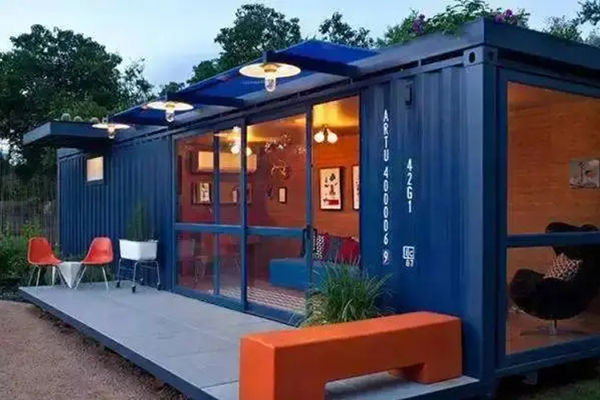
The water and electricity circuit of dry-box type housing container is generally arranged between the outer insulation layer and the inner keel. The top circuit is arranged in the insulation layer. Generally, the waterway is arranged by slotting on the bottom cement board. The sewage channel is set under the cement board to reduce damage to the cement board, and appropriate safety protection measures are taken for the pipes extending outside the box.
In order to increase the aesthetic appearance and improve the thermal insulation performance, the current dry box type housing container adds a roof and external hanging. The roof is made of galvanized steel, aluminum-plated steel, PVC profiles, fiber cement board, etc., and the outer surface is added with a thermal insulation coating to enhance the thermal insulation effect. The slope layout is adopted to reduce the risk of water leakage; the external hanging materials can be selected from galvanized steel, aluminum-plated steel, aluminum profiles, PVC profiles, fiber cement board, etc. Since the dry box type housing container has an outer steel plate, the layout of the external hanging is very convenient.
2. Light steel keel housing container
The light steel keel housing container has a stable bottom structure system. The walls and roof are mainly steel keels. Decorative panels are installed inside the walls and external wall hangings are installed outside the walls. The keel mechanism between the decorative panels and the hangings is used to support the wall surface. The top adopts a light steel system plus an external roof structure.
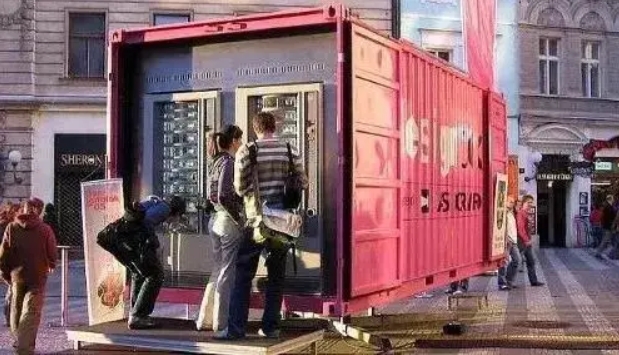
Compared with the dry box housing container, the light steel keel housing container has the following advantages: (1) It is more cozy; (2) It uses less materials and is less difficult to make; (3) It eliminates the external wall panels and external roof panels and directly uses external roof hanging panels and external wall hanging panels to effectively prevent rainwater accumulation and leakage; (4) It is lighter and more in line with the requirements of low-carbon environmental protection; (5) Because its top is supported by light steel keels, it has more structural plasticity and flexibility, and the internal division is simpler and easier. The electrical and water circuit layout principle of the light steel keel housing container is the same as that of the dry box housing container, that is, it must comply with the safety regulations of the area of use to ensure its safety.
3. Plug-in house container
Plug-in house containers are generally based on 20-foot standard containers. The top and bottom of this type of house container are equipped with corner fittings that meet the ISO 20-foot standard container transportation requirements. The corner fittings have components connected to the corner columns and form an integral structure with the top and bottom, which is simple and quick to assemble;
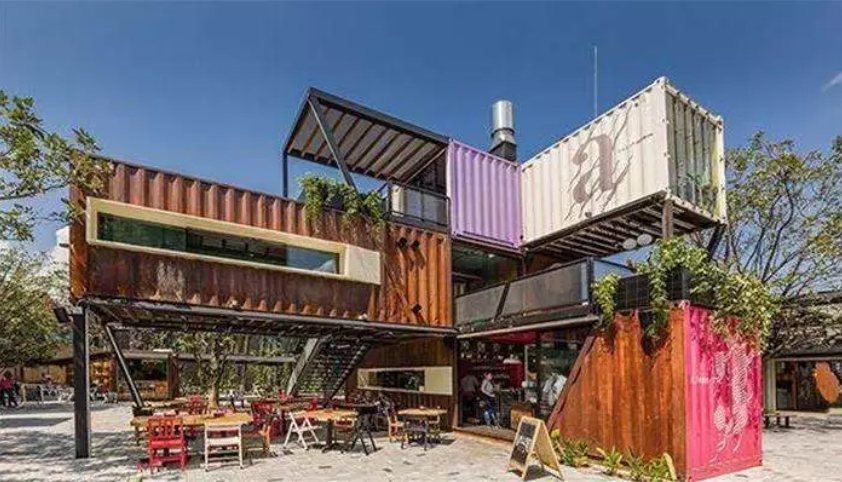
The manufacturer completes the production of the top and bottom, corner columns, windows and doors, and the overall structure and insulation board in the factory, and then uses the bottom of the box as the bearing mechanism and the top as the cover plate to assemble it into a 20-foot standard container. Since the house built with plug-in house containers is spliced and installed, the water system needs to be designed in advance and then added on site. If the house is assembled with multiple plug-in house containers, it is necessary to consider the waterproofing of the splicing box connection, and a special drainage mechanism needs to be designed. The circuits of this type of house container are generally arranged on the top and its sides, and circuits and waterways are generally not arranged on the wall except for switches and sockets. Due to the use of a plug-in connection frame structure, the strength of the plug-in house container is weaker than that of the thousand-box house container, and it is suitable for places with less rain and natural disasters.
Rotating house containers are divided into side panel rotating house containers and side panel folding rotating house containers. The former expands a single standard container to 2^3 times the original size by rotating the side panels to form a house; the latter connects the plug-in house containers through hinges and arranges the side panels reasonably to make it easy to fold and place. When in use, it can be rotated to meet the height requirements.
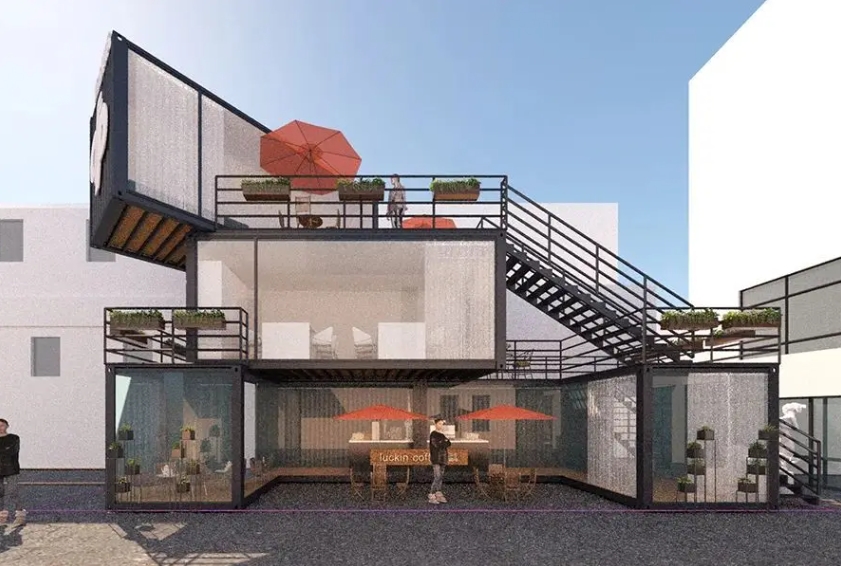
The front and rear ends of the side panel rotating house container are combined with the top and bottom to form a fixed whole. The top is the main body, and an upward flip plate is added to the top beam. The rotating plate is added to the side column and rotated outward to become an end plate parallel to the front and rear ends, and an outward flipping hanging plate is added to the lower side beam. This type of house container is easy to transport and can ensure the strength of the main structure. Its sealing and the support of the flip hanging plate are design difficulties. The folding and rotation of the side panel folding rotating house container is a design difficulty. It requires that the folding plate should not occupy additional space, and that it has the largest effective space after being unfolded and rotated into a house, and it must also meet the requirements of water leakage prevention performance. Compared with the side panel rotating house container, the strength of this type of house container is reduced and the wind resistance is also weakened. There are great challenges in terms of layout and layout.
5. Pull-out house container
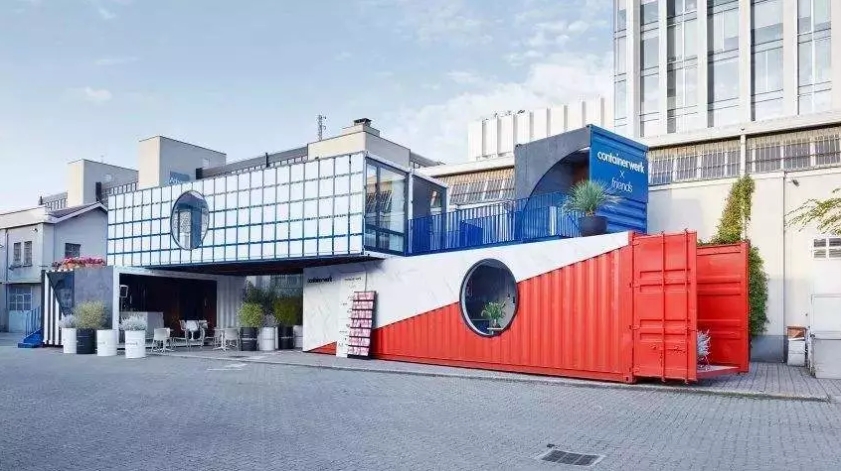
6. Wooden structure house container Wooden structure house container adopts wooden structure system, and also has some steel structure, generally connected by nodes, and decorated with quick assembly materials inside and outside. When using wooden structure house container, the foundation needs to be built in advance, and the container is transported to the installation site in a modular way, and then the house is built by connection. The water and electricity circuits of this type of house container generally adopt the method of "external procurement + on-site installation". Houses built with wooden structure house containers have the advantages of green environmental protection and meet certain strength and stability requirements. At present, this type of house container is widely used in Europe, the United States and Japan.